About ETS
The Engineer Training School at Wajir Barracks, Teshie, trains military personnel and Defence Civilian Staff in professional engineering, technical trades, combat engineering, construction technology, and applied craftsmanship for Ghana Armed Forces operations and national tasks.
Brief history and background
The history of the Engineer Training School can be traced to the beginning of the Second World War, when the 2nd and 3rd Field Engineer Companies were established in May 1939 at Akwatia. Personnel were recruited from nearby diamond mines and from the Public Works Department. In the absence of military bridging equipment, mines, and demolition stores, early military engineering training placed strong emphasis on improvisation. Trade schools were also established at Kibi and Elmina, where recruits received practical training in carpentry, fitting, masonry, and related trades before selected tradesmen joined engineer formations.
Growth of the school
A Training Squadron was later established as part of the Field Engineer Regiment, now 48 Engineer Regiment, to train artisans across the Engineer Corps. As engineering demands increased within the Ghana Armed Forces, the Engineer Corps expanded and the Engineer Training School was formed in 1991. The school was originally established to train artisans for engineer units, but it now trains military artisans and Defence Civilian Staff for the three services of the Ghana Armed Forces.
Organisation and development
ETS has been organised around the HQ Squadron, Civil Engineering Wing, Mechanical and Electrical Wing, Military Training Wing, and Trades Training Wing. Earlier technical courses in carpentry, masonry, electricals, painting and sign writing, field engineering, and assault pioneers were later re-designated to align with technical education standards. The school became accredited by the National Board for Professional and Technician Examinations and was recognised as a Ghana Education Service technical examination centre. Its annual technical and career progression course output has grown significantly, with additional GES Construction Technician and Certificate II learners.
Core mandate
The core mandate of the Engineer Training School is to train, develop, and equip military personnel and Defence Civilian Staff with professional engineering, technical, and combat engineering skills required to support military operations, infrastructure development, and national tasks through specialised engineering trades, technology, and applied craftsmanship.
Degree programmes
In June 2023, the school introduced Bachelor of Technology programmes in collaboration with Sunyani Technical University. These programmes are part of the school's academic growth beyond technical and career progression courses.
- Bachelor of Technology in Electrical and Electronics Engineering.
- Bachelor of Technology in Construction Technology.
- Bachelor of Technology in Wood Construction Technology.
- Bachelor of Technology in Welding and Metallurgical Engineering.
Proficiency and military courses
ETS offers proficiency courses across engineering disciplines and combat engineering routes for military personnel and Defence Civilian Staff.
Technical proficiency routes
- Survey - Basic, Intermediate and Advance
- Electrical Electronic Technology - Basic, Intermediate and Advance
- Topography - Basic, Intermediate and Advance
- Building Construction Technology - Basic, Intermediate and Advance
- Wood Construction Technology - Basic, Intermediate and Advance
- Plumbing and Gas Fitting Technology - Basic, Intermediate and Advance
- Creative Arts Technology - Basic, Intermediate and Advance
Military engineering routes
- Engineer Young Officers and Senior Non-Commissioned Officers Course
- Field Engineering - Basic, Intermediate and Advance
- Assault Pioneer - Basic and Advance
- Heavy Engineering Equipment - Basic and Advance
Certificates and degrees awarded
The school awards certificates and supports degree qualifications across engineering, technology, and combat engineering. Degree awards are delivered with accreditation from Sunyani Technical University, while proficiency certificates align with the specific technical and military course completed.
- B-Tech degrees in Electrical and Electronics Engineering, Construction Technology, Wood Construction Technology, and Welding and Metallurgical Engineering.
- Certificates in Survey, Electrical Electronic Technology, Topography, Building Construction Technology, Wood Construction Technology, Plumbing and Gas Fitting Technology, and Creative Arts Technology.
- Certificates for Engineer Young Officers and Senior Non-Commissioned Officers Course, Field Engineering, Assault Pioneer, and Heavy Engineering Equipment.
Admission requirements
Admission requirements vary by programme. Degree candidates may enter through SSSCE, WASSCE, NABPTEX or CTVET Certificate II, HND, Advanced Level, technical school, post-secondary teacher training, or mature applicant pathways. Proficiency courses are offered to military personnel and Defence Civilian Staff who satisfy the relevant fitness, academic, trade, and course progression requirements.
School identity and facilities
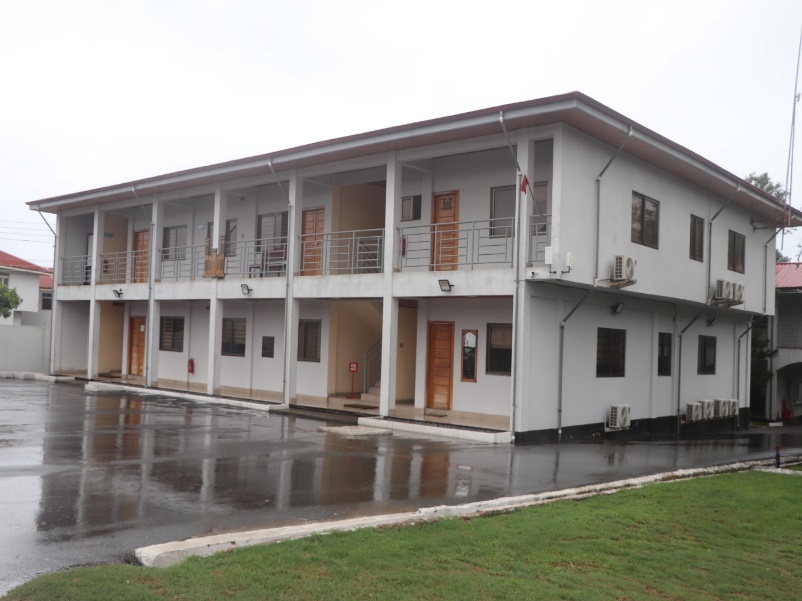
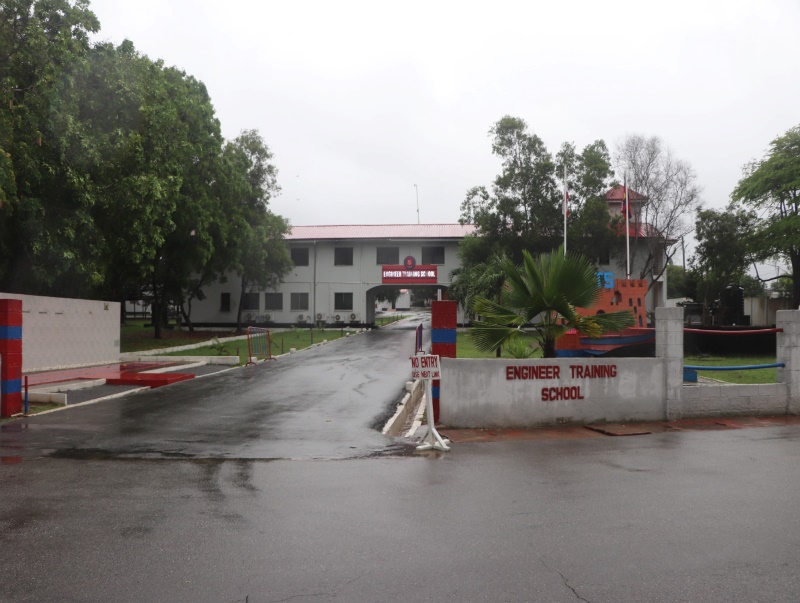
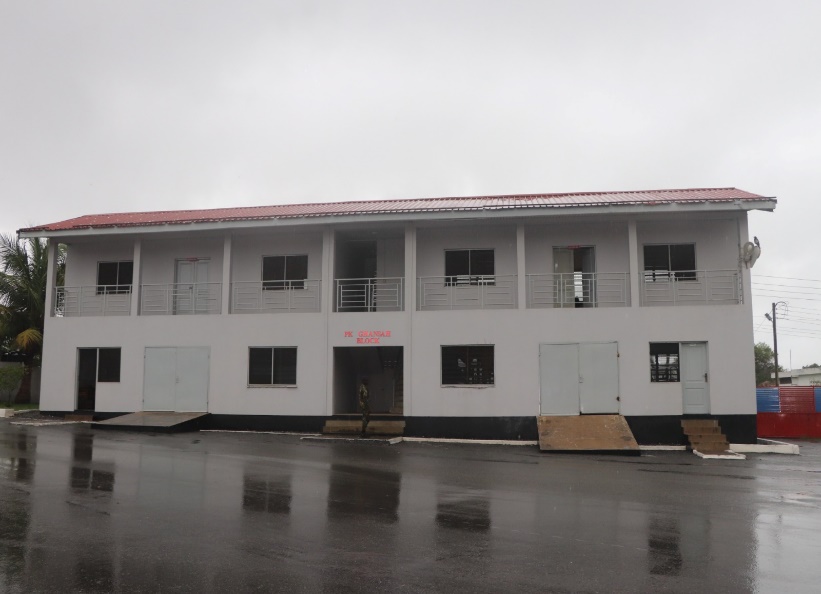
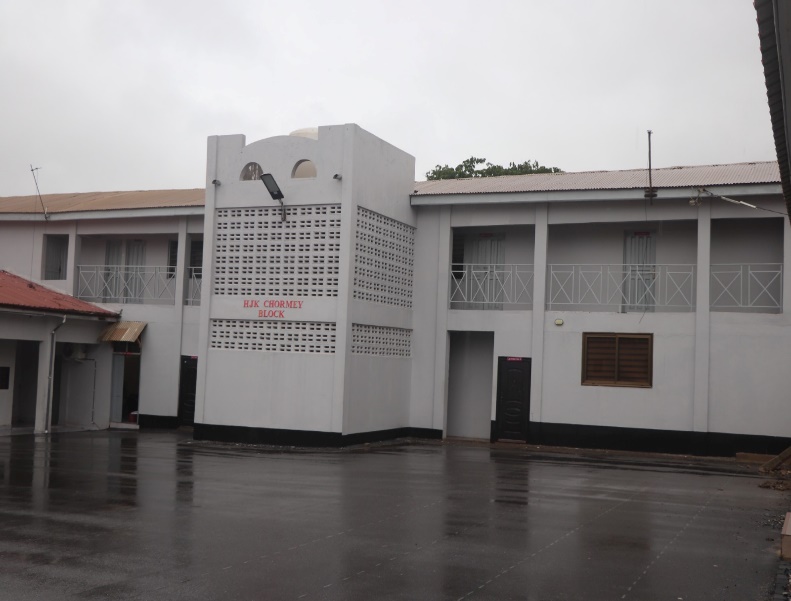
The ETS crest carries the school name and the motto One Step Ahead, with engineering-themed visual identity. The supplied school images show the administration block, entrance gate, high-rise structure, and classroom block that support training delivery at the school.
One Step Ahead reflects the school's drive to develop practical engineering competence for operations, infrastructure, and national tasks.


 NDU
NDU